
Why Finding the Right Production Studio Rental in the DC Area Matters More Than Ever
You have a concept, a deadline, and a brand reputation on the line — but no studio booked. If you are searching for a production studio rental in the DC area, you are not alone. According to a 2024 report from Wyzowl, 91 percent of businesses now use video as a core marketing tool, and that number is only climbing heading into 2026. The Washington, DC metro region — particularly the Northern Virginia corridor — has become a hotbed for commercial shoots, podcast recordings, corporate training videos, and branded content creation.
Yet renting the right studio is surprisingly complicated. Square footage, ceiling height, acoustics, LED technology, internet bandwidth, parking, and proximity to your team all factor into the decision. This guide walks you through everything you need to know about renting a production studio within roughly 20 to 30 miles of Chantilly, Virginia — covering the Dulles corridor, Fairfax County, Loudoun County, and surrounding areas — so you can make a confident, informed choice in 2026.
What Counts as a Production Studio (And What You Actually Need)
Defining a Modern Production Studio
A production studio is a controlled environment purpose-built or adapted for creating media content. Unlike a conference room with a webcam, a true studio offers:
- Controlled lighting: Blackout capability, rigging points, and programmable LED fixtures that eliminate ambient light interference.
- Sound isolation: Acoustic treatments, soundproofing materials, and HVAC systems designed to minimize background noise.
- Professional AV infrastructure: Integrated camera mounts, audio patch panels, high-speed internet, and switcher-ready video outputs.
- Flexible staging: Modular walls, green screens or LED walls, and enough depth for multiple camera angles.
Matching Your Project Type to Studio Features
Not every shoot requires the same setup. Here is a quick breakdown of what different projects typically demand:
- Commercial video shoots: Large open floor plan (1,500+ sq ft), high ceilings (12 ft minimum), rigging for lights, power distribution for heavy equipment, and loading dock access for set pieces.
- Podcast and audio recording: Smaller, acoustically treated room, quiet HVAC, high-speed internet for live streaming, and multiple XLR or USB input options.
- Corporate training and townhalls: LED wall or large display for branded backgrounds, teleprompter compatibility, comfortable seating for on-camera talent, and live stream encoding capability.
- Product photography and e-commerce shoots: Cyclorama wall or infinity backdrop, controllable overhead lighting grid, and ample power outlets for strobe kits.
- Live streaming and hybrid broadcasts: Redundant internet connections (hardwired), broadcast-quality cameras, real-time graphics systems, and a dedicated control room or technical area.
Knowing your project type before you start searching saves hours of back-and-forth with venues and ensures the space you book actually matches your production requirements.
Key Factors to Evaluate When Renting a Production Studio Near Chantilly, VA
Location and Accessibility
The Dulles corridor — stretching from Reston and Herndon through Chantilly and into Ashburn and Leesburg — offers a strategic advantage for DC-area productions. You get proximity to Washington, DC (roughly 25 to 30 miles east), access to Dulles International Airport for out-of-town talent or clients, and significantly more affordable square footage than downtown DC or Arlington.
When evaluating location, consider:
- Drive time for your crew: Studios near Route 28, Route 50, or the Dulles Toll Road (Route 267) are easily accessible from most of Fairfax and Loudoun County.
- Parking: Production crews bring vans, equipment cases, and sometimes box trucks. Free, ample parking is non-negotiable.
- Loading access: A ground-level entrance or loading bay makes setup exponentially faster and reduces risk of equipment damage.
Technology and AV Infrastructure
This is where many studios differentiate themselves — or fall short. In 2026, expect to evaluate:
- LED wall technology: High-resolution LED video walls are replacing green screens for many productions. They provide real-time virtual backgrounds, eliminate post-production compositing, and look dramatically better on camera. A venue with built-in LED walls saves you the cost of renting and installing portable panels.
- Internet speed: For live streaming or hybrid broadcasts, you need symmetrical gigabit fiber at minimum. Ask whether the connection is dedicated or shared with other tenants.
- Power capacity: Professional lighting rigs, LED walls, and camera systems draw significant power. Ensure the studio has adequate circuits — ideally 200 amps or more available to you — with clean, grounded power to prevent interference.
- Audio systems: Built-in patch panels, monitor speakers, and acoustic treatment separate a professional studio from a repurposed warehouse.
Crew and Support Services
Some studios are four-walls-only rentals, meaning you get the empty space and nothing else. Others offer on-site technical support, camera operators, audio engineers, a producer to manage your stream, or even full post-production services. If your team lacks in-house production expertise, a venue that provides AV support can be the difference between a polished final product and a frustrating shoot day.
Flexibility and Customization
Can the studio be reconfigured for different setups within the same booking window? If you are shooting a sit-down interview in the morning and a product demo in the afternoon, you need modular furniture, movable backdrops, and flexible lighting. Studios with rigid, permanent sets limit your creative options.
Production Studio Rental Pricing in the DC Area for 2026
Pricing varies widely based on location, included technology, and support services. Here is a general framework for the Northern Virginia and greater DC metro area in 2026:
- Basic studio space (empty room, minimal AV): $75 to $200 per hour. Common in converted office parks or co-working spaces. You bring all equipment.
- Mid-tier studio (lighting grid, basic AV, sound treatment): $200 to $500 per hour. Suitable for corporate interviews, small-scale video shoots, and podcast recordings.
- Premium studio (LED walls, broadcast-grade AV, on-site tech support): $500 to $1,500+ per hour. Ideal for commercial productions, live broadcasts, product launches, and high-profile corporate content.
- Full-day and multi-day rates: Most studios offer discounted day rates (typically 8 to 10 hours) that work out to 20 to 40 percent less per hour than hourly bookings.
Keep in mind that the cheapest option is rarely the most cost-effective. If you rent a bare-bones space and then spend $3,000 trucking in lights, an LED wall, a sound kit, and a generator, you would have been better off booking a fully equipped studio from the start.
Hidden Costs to Watch For
- Overtime fees: Productions almost always run long. Ask what happens if you go 30 or 60 minutes past your booked window.
- Setup and strike time: Some studios charge for load-in and load-out separately from production time. Clarify this upfront.
- Insurance requirements: Most professional studios require a Certificate of Insurance (COI) naming them as additionally insured. Budget for this if your company does not carry production liability coverage.
- Catering and green room access: If talent or clients will be on-site all day, you need a comfortable holding area and food service. Some venues include this; others charge extra or prohibit outside catering.
How to Get the Most Out of Your Studio Rental Day
Pre-Production Planning
The single biggest factor in a successful studio shoot is preparation. Before your booking date:
- Conduct a site visit: Walk the space with your director of photography or lead producer. Measure dimensions, test acoustics, check outlet placement, and photograph the space for your production plan.
- Create a detailed shot list and run of show: Minute-by-minute schedules keep your crew efficient. A well-planned 8-hour day can yield content that would take 12 hours without a schedule.
- Coordinate with the venue’s technical team: If the studio provides AV support, brief them on your creative vision, required outputs (file formats, resolution, streaming destinations), and any custom graphic overlays or lower thirds.
- Ship or deliver equipment early: If the venue allows early load-in the night before, take advantage of it. Starting your shoot day with a fully built set saves two or more hours of billable time.
Day-of Execution Tips
- Arrive 60 to 90 minutes before talent call time to finalize lighting, audio levels, and camera framing.
- Designate one person as the studio liaison — someone who communicates with venue staff about HVAC adjustments, power issues, or access questions.
- Record a backup audio track on a separate device. Studio environments are controlled, but redundancy prevents disaster.
- Shoot B-roll of the studio, behind-the-scenes moments, and talent preparation. This content is gold for social media and future marketing.
Post-Production Considerations
Before you wrap and leave the studio, verify:
- All files have been transferred and backed up to at least two locations.
- Any live stream recordings have been archived from the streaming platform.
- You have captured the venue’s technical specs (LED wall resolution, color temperature settings, audio sample rate) for post-production color grading and audio mastering.
Why Trivision Event Center Stands Out for Production Studio Rental in the DC Area
Located at 3856 Dulles South Court in Chantilly, Virginia, Trivision Event Center sits at the heart of the Dulles corridor — accessible within 20 to 30 minutes from most of Fairfax County, Loudoun County, Prince William County, and the broader DC metro area. But location is just the starting point.
What makes Trivision genuinely different from converted warehouses and hotel ballrooms repurposed as studios:
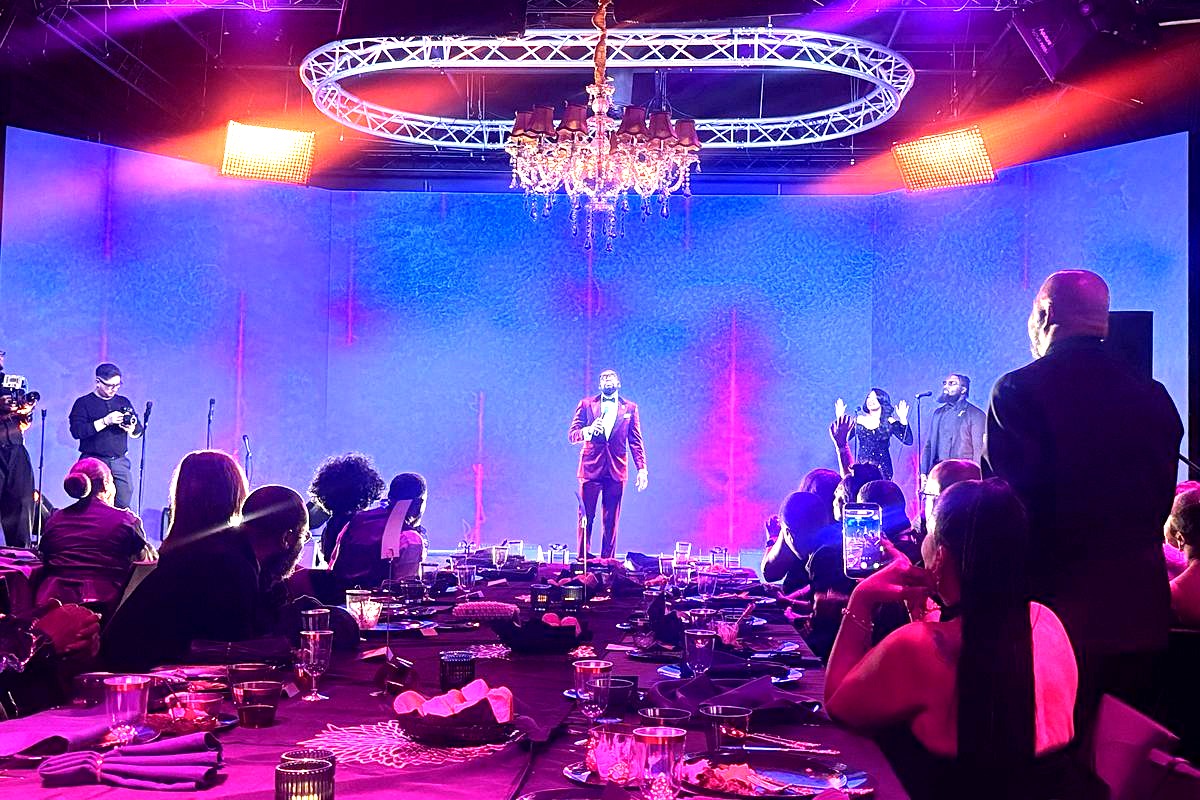
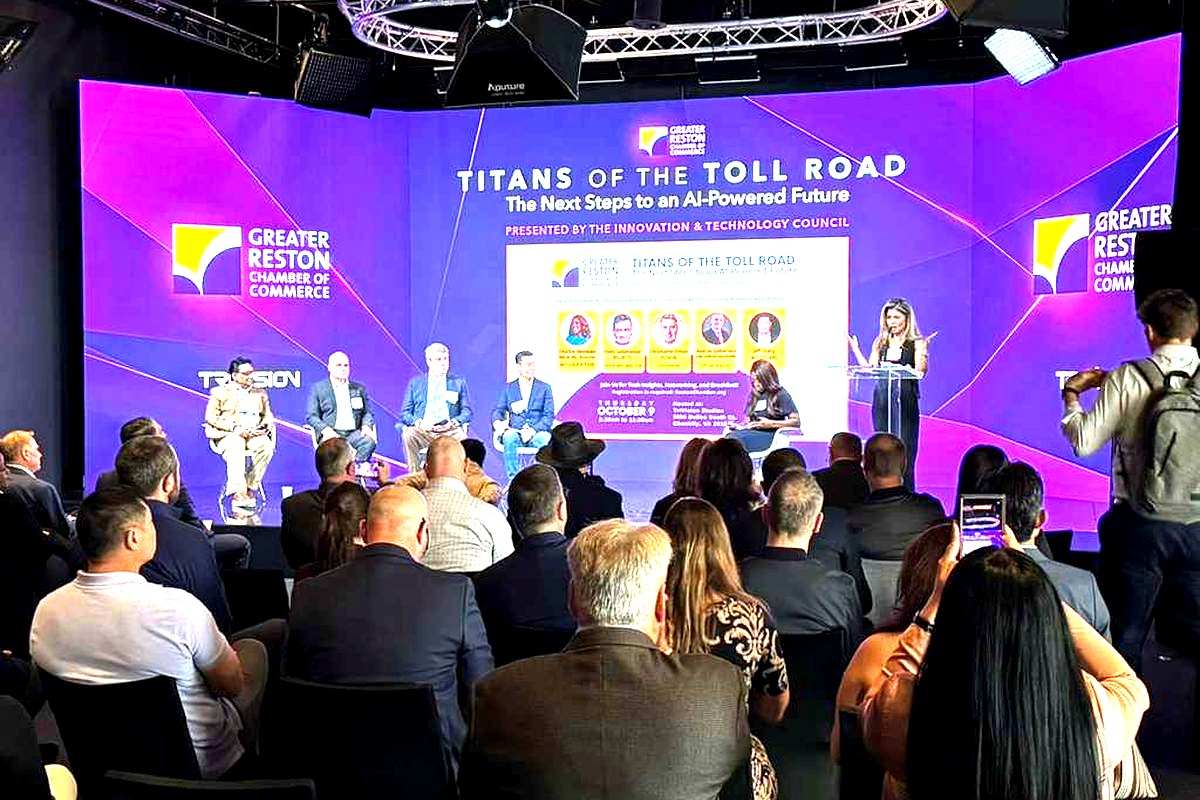
- Built-in LED video walls: High-resolution LED walls are integrated into the venue, eliminating the need (and cost) to rent portable panels. Whether you need a branded corporate backdrop, a virtual set for a broadcast, or dynamic visuals for a product launch video, the LED infrastructure is ready.
- Professional AV production built in: Trivision is not a four-walls rental. The venue offers integrated audio-visual production capabilities — cameras, switching, audio, and live streaming — with technical support available to manage your production.
- Flexible studio configurations: Multiple studio spaces can be configured for different production types within the same visit. Shoot a CEO interview in one setup, pivot to a panel discussion, and then capture product demos — all without leaving the building.
- Ample free parking and easy load-in: Crew vehicles, equipment vans, and client cars all have space. The ground-level facility eliminates elevator bottlenecks and freight dock scheduling headaches.
- Corporate-ready environment: Unlike raw warehouse studios, Trivision’s modern, finished interiors mean your clients and executives walk into a professional setting — not a construction zone with lights.
For production companies, corporate marketing teams, and content creators operating in the DC area in 2026, Trivision offers the rare combination of broadcast-quality technology, flexible space, and hands-on support — all within one venue.
Frequently Asked Questions About Production Studio Rental in the DC Area
How far in advance should I book a production studio rental in the DC area?
For high-demand studios with LED walls and full AV support, booking four to six weeks in advance is recommended — especially during peak corporate production seasons (Q1 kickoffs in January through March, and Q4 year-end content pushes in October through December). Simpler, four-walls studio spaces may have shorter lead times, but last-minute bookings often come with premium pricing or limited time slots.
What is typically included in a production studio rental?
Inclusions vary dramatically between venues. A basic rental may include only the physical space, power, and climate control. Mid-tier and premium studios often include a lighting grid, acoustic treatment, high-speed internet, and furniture. Top-tier venues like Trivision Event Center include LED walls, integrated AV production equipment, and on-site technical support — significantly reducing the amount of gear and crew you need to bring.
Can I use a production studio for live streaming and hybrid events?
Yes, but not all studios are equipped for it. Live streaming requires dedicated, high-speed internet (preferably hardwired fiber with symmetrical upload speeds), encoding hardware or software, and often a separate control area for your technical director. Studios near Chantilly and the Dulles corridor that specialize in corporate and broadcast production — such as Trivision Event Center — are specifically designed to support live streaming, hybrid webcasts, and virtual event production.
Do I need to bring my own equipment to a studio rental?
It depends on the venue. Four-walls studios require you to bring everything — cameras, lights, audio, monitors, and any set design. Full-service production studios include much of this infrastructure. Before booking, request a detailed equipment list from the venue and compare it to your production requirements. Bringing less gear means faster setup, fewer crew members, and lower overall production costs.
What types of content can I produce in a rented studio near Chantilly, VA?
Modern production studios in the Chantilly and Dulles corridor area support a wide range of content types: corporate training videos, CEO and executive communications, podcast and vodcast recordings, product launch and demo videos, commercial and brand content shoots, webinars and virtual town halls, social media content batching, and photography sessions. The versatility of the space and its AV technology determine how many of these formats you can tackle in a single booking.
How much does a production studio rental cost per hour in Northern Virginia?
In 2026, expect to pay between $75 and $200 per hour for a basic space with minimal technology, $200 to $500 per hour for a mid-tier studio with lighting and sound treatment, and $500 to $1,500 or more per hour for a premium studio with LED walls, broadcast AV, and on-site production support. Full-day rates typically offer 20 to 40 percent savings over hourly bookings. Contact venues directly for customized quotes based on your specific production needs.
Book Your Next Production at Trivision Event Center
Finding the right production studio rental in the DC area comes down to matching your creative vision with a space that has the technology, flexibility, and support to execute it flawlessly. Whether you are producing a quarterly corporate video series, launching a branded podcast, streaming a company-wide townhall, or filming a commercial campaign, the studio you choose directly impacts the quality of your final product — and the sanity of your production team.
Trivision Event Center in Chantilly, Virginia, was built from the ground up to serve exactly these needs: LED video walls, integrated AV production, flexible studio configurations, and a professional team that understands broadcast-quality execution. All of it within 20 to 30 minutes of most locations in Fairfax County, Loudoun County, and the greater DC metro area.
Ready to see the space for yourself? Visit trivisioneventcenter.com to schedule a walkthrough, request a custom quote, or speak with the production team about your next project. Your content deserves better than a conference room with a ring light.