
What Is AV Production for Events? The Foundation of Every Memorable Experience
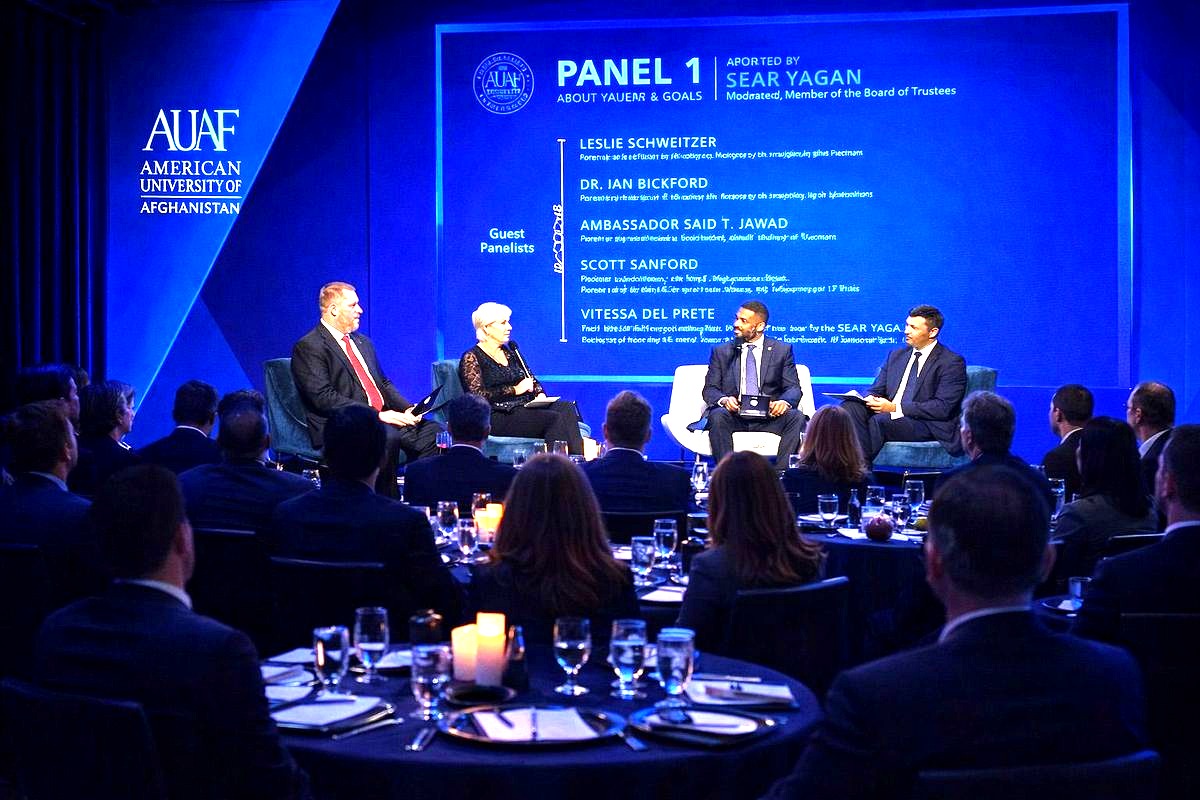
You have spent months planning every detail of your corporate conference, fundraiser gala, or product launch—only to watch attendees squint at a dim projector screen while a speaker’s voice crackles through a rented PA system. It is a scenario that plays out more often than most planners care to admit, and it almost always traces back to one overlooked element: audiovisual production. According to a 2024 survey by the Events Industry Council, 85 percent of event attendees say the quality of sound, lighting, and video directly influences their perception of the hosting organization. In other words, AV is not a nice-to-have—it is the backbone of every professional gathering.
So, what is AV production for events, exactly? This guide is an educational deep dive designed to demystify every component, explain why each one matters, and help you make informed decisions before you book your next event space in the Northern Virginia area—roughly within a 20–30 mile radius of Chantilly, VA. Whether you are an experienced corporate planner or organizing your very first fundraising gala in 2026, understanding AV production will separate a forgettable meeting from a standing-ovation experience.
Defining AV Production: More Than Just Speakers and Screens
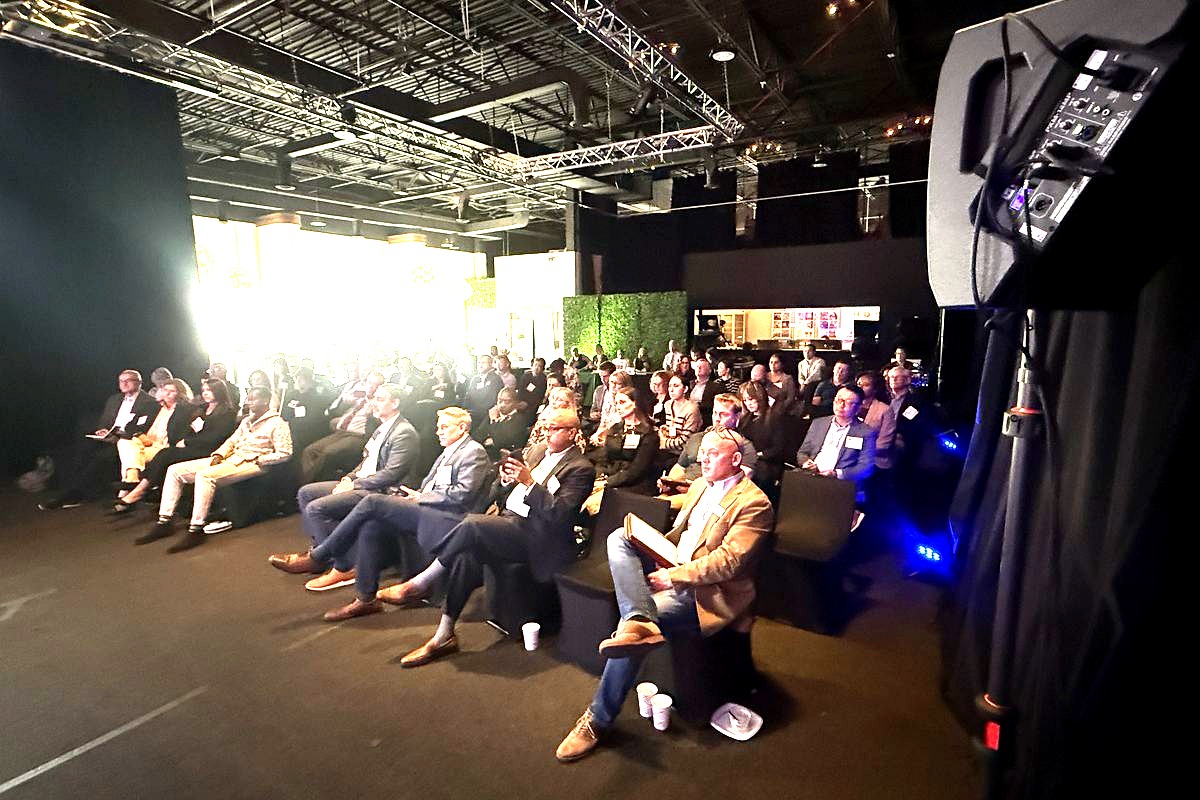
At its core, audiovisual (AV) production is the strategic integration of sound, lighting, and video technologies to deliver content, set atmosphere, and engage audiences during a live or hybrid event. But that textbook definition barely scratches the surface. Modern AV production in 2026 encompasses:
- Audio engineering — microphones, mixing consoles, distributed speaker arrays, and real-time sound processing.
- Lighting design — stage washes, intelligent moving heads, LED uplighting, and programmed cue sequences.
- Video production — cameras, LED video walls, content playback servers, switchers, and live graphics.
- Show control — software-driven systems that synchronize audio, lighting, and video into a seamless timeline.
- Signal distribution — the infrastructure (cabling, network switches, fiber runs) that connects everything reliably.
Think of AV production as the central nervous system of your event. Every keynote speech, every branding moment, every dramatic reveal depends on these systems working in concert. When they do, the audience never thinks about the technology—they simply feel the experience.
Why the Term ‘AV Production’ Matters in 2026
You may hear related terms—event technology, production services, technical event management—used interchangeably. While there is overlap, AV production specifically refers to the creative and technical execution of audio, visual, and lighting elements. It is distinct from event logistics (catering, registration, transportation) and from event design (theme, décor, floral). Understanding this distinction helps you allocate budget correctly, ask the right questions, and hire the right partners.
The Three Pillars of AV Production Explained
1. Sound: The Invisible Pillar That Makes or Breaks Engagement
Audio is paradoxical: when it is done well, nobody notices it; when it fails, it is the only thing people remember. Professional event sound encompasses several layers:
- Reinforcement — Ensuring every seat in the room receives clear, even volume. This often requires line-array or point-source speaker systems positioned and tuned for the specific room geometry.
- Microphones — Lapel (lavalier) mics for presenters, handheld mics for Q&A, podium mics for panels, and boundary mics for round-table discussions. Wireless frequency coordination is critical, especially near Dulles Airport where RF congestion is high.
- Mixing and processing — A front-of-house engineer blends multiple sources in real time, applying equalization, compression, and feedback suppression to keep audio crisp.
- Monitoring — Stage monitors or in-ear systems let speakers and performers hear themselves, reducing the awkward pauses that come from audio uncertainty.
- Recording and streaming feeds — Separate audio mixes routed to recording devices or streaming encoders ensure remote attendees hear broadcast-quality sound.
A common mistake planners in the Fairfax County and Loudoun County area make is assuming the venue’s ‘house sound’ is sufficient. Built-in ceiling speakers designed for background music rarely deliver the clarity and power needed for a 200-person keynote or a live band at a gala.
2. Lighting: Setting Mood, Directing Attention, Reinforcing Brand
Lighting is the most emotionally impactful pillar. It controls what your audience sees—and, more importantly, what they feel. Professional event lighting includes:
- Stage wash — Even, flattering illumination on speakers and performers, often using LED Fresnel or ellipsoidal fixtures with adjustable color temperature.
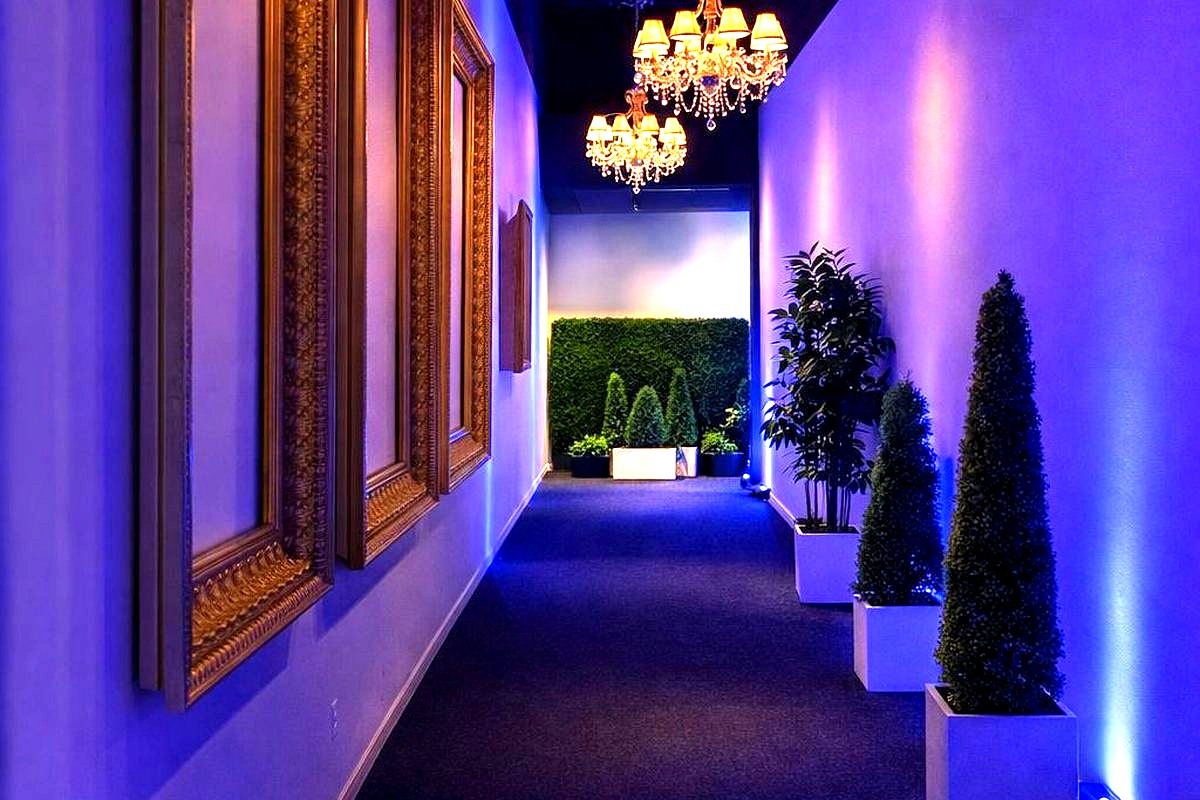
- Ambient/uplighting — Wireless LED uplights placed around the room to bathe walls and columns in branded colors, transforming even a plain ballroom into an immersive environment.
- Intelligent fixtures — Moving-head lights that can change color, pattern (gobo), and position on command, adding dynamic motion to awards ceremonies, product reveals, or entertainment segments.
- Follow spots — Manually operated or automated spotlights that track a speaker or performer across the stage.
- Programmed cue lists — Using a lighting console, a designer pre-programs scene changes so that lighting transitions align precisely with the event run-of-show.
Lighting also plays a functional role: it draws the audience’s eye to the stage, minimizes distractions, and ensures cameras capture usable footage. For hybrid and live-streamed events—common among organizations based near Washington, DC—camera-friendly lighting is non-negotiable.
3. Video: The Visual Storytelling Engine
Video is often the most visible (and most budget-intensive) pillar of AV production. It includes:
- Display technology — LED video walls, projection screens, LCD monitors, or a combination. LED walls, in particular, have become the gold standard for corporate events in 2026 because they deliver vibrant images even in well-lit rooms.
- Content playback — Media servers that play back pre-produced videos, slide decks, lower-third graphics, and animated backgrounds with frame-accurate timing.
- Live cameras (IMAG) — Image magnification cameras that project close-up shots of speakers onto large screens so every attendee, even those in the back row, feels connected.
- Video switching — A technical director uses a video switcher to cut between cameras, slides, and video playback in real time—similar to a live television broadcast.
- Graphics and virtual sets — Real-time graphics engines can overlay sponsor logos, social-media feeds, live polls, and branded lower thirds, elevating the production value.
In the Northern Virginia market—spanning communities like Chantilly, Centreville, Ashburn, Reston, and Herndon—corporate clients increasingly expect broadcast-quality video as a baseline. The proximity to DC’s media ecosystem has raised the bar for what attendees consider ‘professional.’
What Is AV Production for Events in Practice? A Real-World Workflow
Understanding the components is one thing; seeing how they come together is another. Here is a simplified workflow that a professional AV team follows for a typical event within 20–30 miles of Chantilly, VA:
- Discovery & Pre-Production (4–8 weeks out) — The AV team meets with the planner to review objectives, audience size, room dimensions, content assets, and budget. A technical rider or AV specification document is created.
- Design & Engineering (3–6 weeks out) — Using CAD or 3D rendering software, the team designs the stage layout, speaker placement, lighting plot, and screen configuration. Power requirements and rigging points are confirmed with the venue.
- Equipment Prep (1 week out) — Gear is pulled, tested, labeled, and loaded. Content is formatted, encoded, and loaded onto media servers.
- Load-In & Setup (event day minus 1, or morning-of) — The crew arrives, installs rigging, hangs screens and lights, sets up audio, runs cable, and connects all systems.
- Sound Check & Rehearsal — Audio is tuned to the room using measurement microphones. Lighting cues are walked through. Presenters rehearse with microphones and confidence monitors.
- Live Show — Engineers run sound, lighting, and video in real time, following the cue sheet and adapting to any changes on the fly.
- Strike & Load-Out — After the event, everything is carefully de-rigged, packed, and removed.
When an event venue has built-in AV infrastructure—such as permanently installed LED walls, integrated sound systems, and dedicated control rooms—steps 4 and 7 become dramatically faster and less expensive. This is a key reason planners in Fairfax County and western Loudoun County are gravitating toward purpose-built production venues rather than generic banquet halls.
Why Professional AV Production Matters for Your 2026 Events
Still wondering whether investing in quality AV production is worth the line item? Consider these benefits:
Audience Engagement and Retention
Research from Freeman Events shows that events with high-quality AV production see up to 30 percent higher audience engagement scores compared to events with basic setups. Crisp audio keeps people listening. Dynamic lighting keeps them watching. Stunning visuals keep them sharing on social media.
Brand Perception
Your event is a direct reflection of your brand. A polished AV production communicates competence, investment, and professionalism. Conversely, a flickering projector and a screeching microphone communicate the opposite—regardless of how strong your actual message is.
Speaker Confidence
Presenters perform better when they trust the technology. Reliable confidence monitors, responsive audio, and professional stage lighting reduce anxiety and help speakers deliver their best performance.
Hybrid and Remote Reach
In 2026, a significant percentage of event audiences participate remotely. Professional AV production ensures remote attendees receive a broadcast-quality experience—not a shaky webcam feed with muffled audio. This is especially important for organizations in the DC metro area hosting national or global audiences.
Risk Mitigation
Professional AV teams bring redundancy: backup microphones, spare cables, secondary playback sources, and UPS battery backup. In a region prone to summer storms and occasional power fluctuations, redundancy is not paranoia—it is planning.
How to Evaluate AV Production Capabilities When Choosing a Venue
If you are scouting event venues within 20–30 miles of Chantilly, VA—think Reston, Tysons, Herndon, Ashburn, Centreville, Manassas, or Leesburg—here is a checklist to assess AV production capabilities:
- In-house equipment inventory — Does the venue own professional-grade audio, lighting, and video equipment, or will you need to rent everything from a third party?
- LED wall availability — Are high-resolution LED video walls permanently installed? What pixel pitch are they, and what are their dimensions?
- Control rooms — Is there a dedicated AV control room or tech booth, or will your engineers be mixing from a folding table in the corner?
- Power capacity — Does the venue provide sufficient dedicated electrical circuits (measured in amps) for production equipment without tripping breakers?
- Rigging points — Are there ceiling-rated rigging points for hanging speakers, lights, and screens safely?
- Acoustic treatment — Has the room been acoustically treated to minimize echo and reverb, or will sound bounce off hard surfaces?
- Internet and network infrastructure — Is there dedicated, high-bandwidth internet for streaming, and is it separate from guest Wi-Fi?
- On-site technical staff — Does the venue employ experienced AV technicians, or are you responsible for bringing your own crew?
Venues that check most or all of these boxes save planners significant time, money, and stress. You avoid the logistical headaches of coordinating outside AV vendors, transporting heavy equipment, and troubleshooting compatibility issues in an unfamiliar space.
Common AV Production Mistakes (and How to Avoid Them)
Even seasoned planners stumble when it comes to AV. Here are the most frequent mistakes we see in the Northern Virginia event scene—and how to sidestep them:
- Waiting too long to plan AV — AV should be one of the first budget items locked in, not an afterthought added two weeks before the event. Start planning AV at least 6–8 weeks in advance for mid-size events.
- Underestimating audio needs — A 300-person conference requires a very different sound system than a 50-person board meeting. Always share your expected attendance and room size with your AV partner.
- Ignoring lighting for cameras — If your event will be live-streamed, photographed, or recorded, your lighting must be designed for cameras, not just the naked eye. Camera-friendly lighting uses higher color-rendering-index (CRI) fixtures and avoids extreme contrasts.
- Skipping the rehearsal — A 30-minute technical rehearsal can prevent hours of troubleshooting during the live event. Always allocate time for a sound check and walk-through.
- Choosing a venue without AV infrastructure — Renting a beautiful but tech-barren space means layering on tens of thousands of dollars in rental equipment and labor. Venues with built-in production infrastructure often deliver better results at lower total cost.
Frequently Asked Questions About AV Production for Events
What does AV production include?
AV production includes the planning, design, setup, and live operation of all audio, video, and lighting systems for an event. This encompasses microphones, speakers, mixing consoles, LED video walls or projection screens, media servers, cameras for live image magnification, stage and ambient lighting, show-control software, and all associated cabling and infrastructure. It may also include live streaming, recording, and real-time graphics.
How much does AV production cost for an event in Northern Virginia?
Costs vary widely depending on event size, complexity, and whether the venue has built-in AV infrastructure. A basic setup for a 50-person corporate meeting might start around $1,500–$3,000, while a full-scale production for a 500-person gala with LED walls, IMAG cameras, intelligent lighting, and live streaming can range from $15,000 to $50,000 or more. Choosing a venue with integrated AV systems can reduce these costs significantly by eliminating rental and transport fees.
What is the difference between AV production and AV rental?
AV rental refers to simply leasing equipment—speakers, screens, microphones—often without skilled operators. AV production is a comprehensive service that includes equipment, engineering, creative design, technical labor, rehearsal, and live operation. Production delivers a curated experience; rental delivers boxes of gear. For professional events, production is almost always the better investment.
Can a venue’s in-house AV replace hiring an outside production company?
In many cases, yes—if the venue has professional-grade, permanently installed equipment and experienced on-site technicians. Venues with integrated LED walls, acoustically treated rooms, dedicated control booths, and trained staff can deliver production quality that rivals or exceeds what an outside vendor provides, often at a lower total cost because there is no equipment transport, load-in labor, or compatibility troubleshooting.
Why is AV production important for corporate events?
Corporate events represent an organization’s brand, values, and professionalism. Poor AV—muffled audio, washed-out visuals, awkward lighting—undermines credibility regardless of the quality of the content being presented. Professional AV production ensures every attendee, whether in the room or joining remotely, receives a polished, engaging experience that reinforces trust in the hosting organization.
How far in advance should I plan AV for my event?
For most mid-size to large events (100+ attendees), begin AV planning at least 6–8 weeks in advance. Large-scale productions with custom set builds, LED wall configurations, or complex hybrid streaming may require 10–12 weeks. Starting early ensures availability of equipment and crew, allows time for content design, and builds in room for rehearsals.
Experience Professional AV Production at Trivision Event Center
Now that you understand what is AV production for events and why every component matters, the next question is simple: where will you host your next event? Trivision Event Center, located at 3856 Dulles South Court in Chantilly, VA, was purpose-built for professional AV production. Our facility features permanently installed LED video walls, integrated sound systems, dedicated control rooms, flexible studio spaces, and experienced on-site technical staff—eliminating the need to coordinate outside AV vendors and dramatically reducing your production costs.
Whether you are planning a 2026 corporate conference, a nonprofit gala, a product launch, or a hybrid town hall for attendees across the globe, our venue delivers broadcast-quality AV production in a modern, flexible space just minutes from Dulles Airport and accessible to teams across Fairfax County, Loudoun County, and the greater DC metro area.
Ready to see the difference built-in AV production makes? Contact Trivision Event Center today to schedule a tour and start planning your next unforgettable event.