
Why Finding the Right Hybrid Event Space Near DC Is Harder Than You Think
You have a keynote speaker flying into Dulles, 200 in-person attendees confirmed, and another 600 joining virtually from three time zones. The last thing you need is a venue that treats the virtual audience like an afterthought. Yet that is exactly what happens when event planners book a traditional ballroom and try to retrofit it for hybrid delivery. According to a 2025 report from Grand View Research, the global virtual events market is projected to reach $657 billion by 2030, growing at a CAGR of 23.7%—which means hybrid is not a passing trend. It is the new baseline for corporate gatherings, association conferences, and large-scale galas in the Washington DC metro area.
If you are searching for a hybrid event space near DC, you need a venue selection framework built specifically for dual-audience delivery. This guide gives you that framework. We will walk through the exact technical, logistical, and production criteria that separate a truly hybrid-ready venue from one that simply has a webcam plugged into a laptop. And because proximity matters—especially when your crew is loading in gear at 6 AM—we are keeping our lens tightly focused on venues within a 20–30 mile radius of Chantilly, Virginia, the sweet spot between Dulles International Airport and downtown DC.
The Non-Negotiable Technical Criteria for a Hybrid Venue
Hybrid events live or die on infrastructure you cannot see from a site visit photo gallery. Before you evaluate aesthetics, layout, or catering menus, you need to audit the invisible backbone of any venue you are considering.
Dedicated Internet Bandwidth—Not Shared Wi-Fi
Streaming a multi-camera, 1080p (or 4K) production to hundreds or thousands of remote viewers demands dedicated, symmetrical internet bandwidth. Here is the rule of thumb most AV producers follow in 2026:
- Minimum upload speed for a single-stream hybrid event: 20 Mbps dedicated (not shared with guest Wi-Fi)
- Recommended upload speed for multi-stream or 4K delivery: 50–100 Mbps dedicated
- Redundancy: A second ISP connection or cellular bonding failover so the stream does not drop if the primary line hiccups
Ask the venue for a recent speed test—not a spec sheet from the ISP contract. A venue like Trivision Event Center in Chantilly, VA, maintains enterprise-grade fiber connectivity specifically because hybrid production is a core part of its operation, not a bolt-on service. That distinction matters enormously.
Camera-Friendly Lighting and Rigging Points
If your virtual audience is watching a dimly lit stage with harsh overhead fluorescents, engagement drops within seconds. Hybrid-ready venues offer:
- Adjustable, zone-based LED lighting that can be tuned for both in-room ambiance and on-camera color temperature (typically 3200K–5600K)
- Ceiling rigging points or grid systems for mounting PTZ (pan-tilt-zoom) cameras at multiple angles
- Minimal natural light bleed—or blackout capability—so the production team controls every lumen hitting the stage
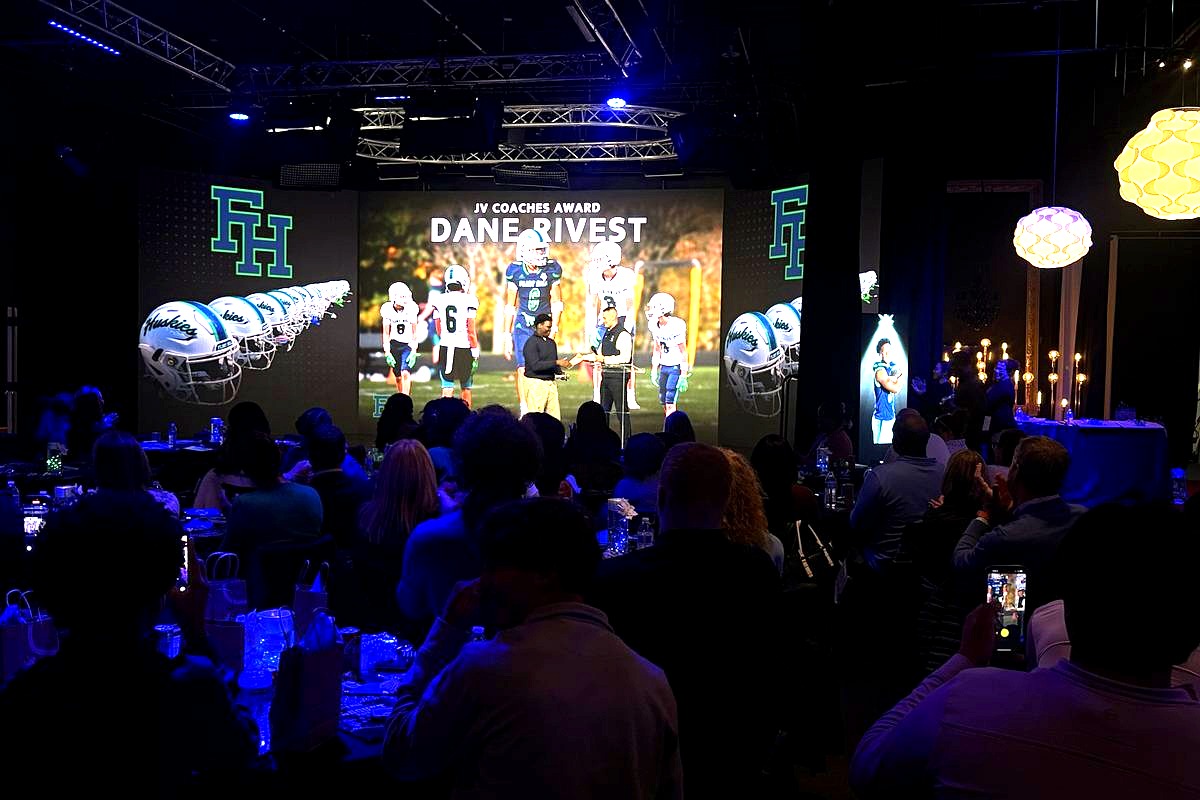
A venue with built-in LED video walls is especially valuable here because the wall itself becomes both the stage backdrop and a dynamic content surface for virtual viewers. Instead of a static banner behind the speaker, the remote audience sees branded visuals, presentation slides, or live data dashboards rendered in vivid, camera-friendly resolution.
Hardwired AV Signal Paths
Wireless is convenient. Hardwired is reliable. For hybrid events, reliability wins every time. Evaluate whether the venue has:
- SDI or HDMI cable runs pre-installed between the stage, the control room, and camera positions
- An on-site video switcher or production control room where a technical director can manage camera feeds, graphics overlays, and stream encoding in real time
- Audio snakes or Dante-networked audio connections that let the stream mixer receive a clean board feed separate from the house speakers
Venues that were designed for production—rather than retrofitted after the fact—typically have these signal paths built into the walls and floor. That means faster load-in, fewer cable runs across the floor (a tripping hazard and an eyesore), and a more polished final product for both audiences.
Camera Angles and Stage Design: What Most Planners Overlook
Here is a scenario that plays out at hybrid events more often than it should: the in-room experience is immersive and energizing, but the remote viewer sees a single wide shot from the back of the room. The speaker is a tiny figure dwarfed by rows of heads. The energy does not translate. The virtual audience starts multitasking, and your engagement metrics crater.
Multi-Camera Coverage Is Not Optional
A professional hybrid event in 2026 requires a minimum of three camera angles:
- Wide shot: Establishes the room and gives virtual attendees a sense of the live energy
- Medium shot: Frames the speaker from the waist up, showing gestures and body language
- Tight shot or presentation capture: Either a close-up on the speaker’s face for emotional connection or a direct feed of the slide deck / LED wall content
The venue’s physical layout directly impacts whether these angles are achievable. You need clear sightlines from at least two elevated positions (front-of-house and a 45-degree offset) plus a camera position near the stage. Ask the venue if they have designated camera platforms or if they have worked with production crews to establish proven camera positions in the past.
Stage Orientation for Dual Audiences
Traditional event stages are designed for one audience: the people in the room. Hybrid stages need to serve two. Consider these design principles when evaluating a venue:
- Depth of stage: The speaker needs room to move without walking out of frame. A minimum of 12 feet of usable depth is ideal.
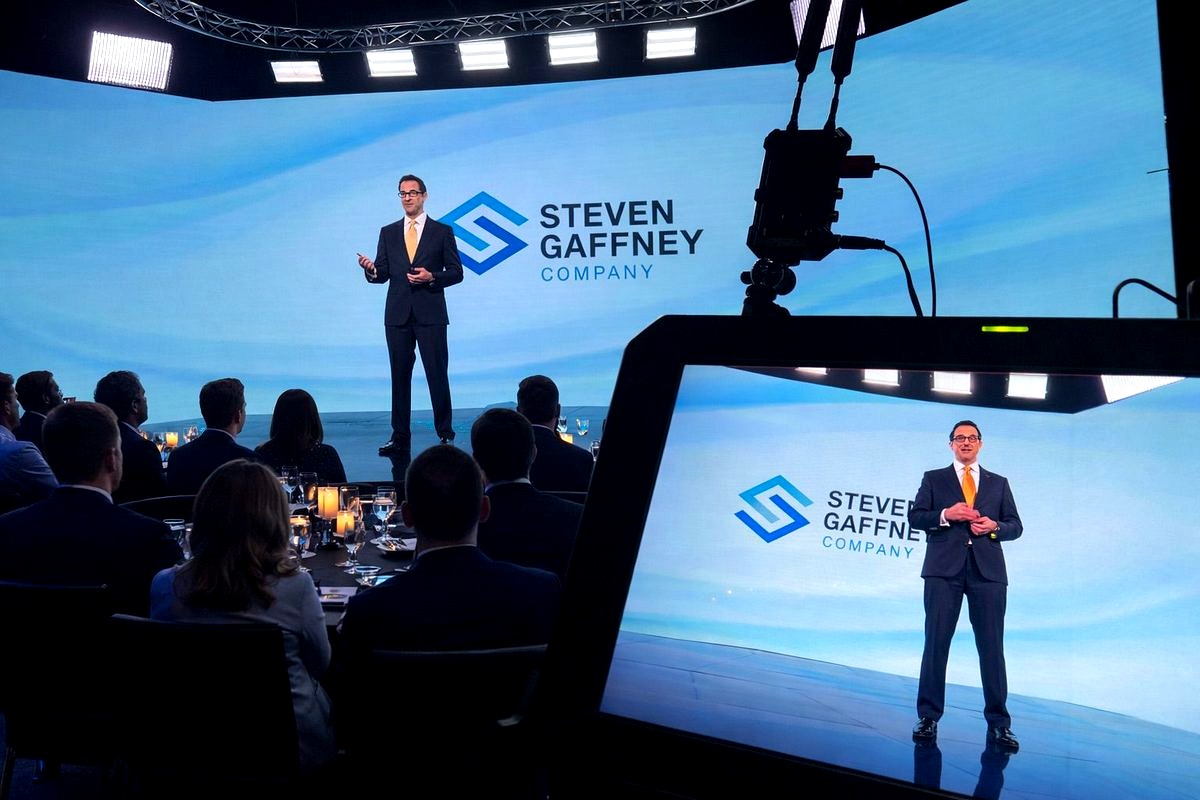
- LED wall or screen placement: If the wall is directly behind the speaker, camera operators can frame both the person and the content in a single shot—eliminating the need to cut away to a separate screen capture.
- Confidence monitors: The speaker needs to see their slides, the live chat or Q&A feed, and a countdown timer without turning away from the camera. Venues with built-in floor monitors or teleprompter-style displays make this seamless.
Trivision Event Center’s flexible studio layouts are built around this exact principle. The LED walls serve as both the in-room visual centerpiece and the camera-facing backdrop, so the production team can deliver broadcast-quality framing without additional set construction.
Producer Support and On-Site Technical Staffing
This is the selection criterion that separates a stressful hybrid event from a smooth one. Even if you are bringing your own AV production company, the venue’s on-site team plays a critical supporting role.
What to Ask About In-House Technical Support
- Is there a dedicated technical director or AV engineer on-site during the event? You need someone who knows every cable run, circuit breaker, and quirk of the house system.
- Can the venue provide a stream producer? A stream producer manages the virtual experience—monitoring chat, cueing remote speakers, switching lower thirds, and ensuring the encoding software stays healthy. This role is distinct from the in-room event manager.
- Does the venue offer pre-event technical rehearsals? A 90-minute rehearsal the day before your event can surface issues that would otherwise become live problems. Venues that schedule these proactively are venues that understand hybrid production.
- What happens if something breaks during the event? Ask about spare equipment inventory. A venue with backup switchers, spare cables, and a redundant streaming encoder is worth its weight in gold.
The Cost Equation: In-House vs. Third-Party Production
Bringing in an outside AV production company to a venue that lacks infrastructure can easily add $15,000–$40,000 to your budget for a single-day hybrid event in the Northern Virginia area. That figure includes equipment rental, trucking, labor for load-in and strike, and the production crew itself. When you choose a venue that already has LED walls, cameras, a control room, and technical staff built into the rental package, you collapse most of those line items. The savings are not trivial—they often represent 25–40% of the total production budget.
Evaluating the Virtual Attendee Experience From the Venue
Too many planners evaluate a hybrid venue only from the perspective of someone standing in the room. Flip the lens. Sit down at your laptop and ask: what will the remote attendee see, hear, and feel?
Audio Quality Is the Silent Dealbreaker
Virtual attendees will tolerate imperfect video. They will not tolerate bad audio. The venue must provide:
- Lavalier or headset microphones for every speaker (handheld mics introduce handling noise and inconsistent levels)
- A separate audio mix for the stream that is independent from the house PA mix. The room mix is optimized for 300 people in a space. The stream mix is optimized for headphones.
- Room acoustic treatment—or at least a space with minimal echo and reverb. Hard parallel walls and concrete floors create audio reflections that sound terrible on a stream, even with good microphones.
Interactivity Features That Close the Distance
The best hybrid venues in 2026 go beyond simple streaming. They enable genuine two-way interaction:
- Live Q&A integration: Questions from virtual attendees displayed on the LED wall or a confidence monitor so the speaker can address them naturally
- Polling and surveys: Real-time audience polling that aggregates responses from both in-room and remote attendees into a single data set
- Breakout room support: Some venues offer secondary studio spaces where smaller hybrid breakout sessions can run simultaneously, each with their own camera and stream
When evaluating venues within the Chantilly, Centreville, Fairfax, Reston, Herndon, or Ashburn corridor, ask specifically about these interactivity capabilities. A venue that has hosted dozens of hybrid events will have workflows already built for these features. A venue doing it for the first time will be figuring it out on your dime.
Location and Logistics: The Practical Side of Picking a Hybrid Venue
Technical capability is paramount, but logistics still matter—especially for hybrid events where you are coordinating both a physical and a digital experience simultaneously.
Proximity to Dulles and DC
Most hybrid events in this region draw speakers and VIP attendees who fly into Dulles International Airport (IAD). A venue within 15 minutes of Dulles eliminates the risk of a keynote speaker arriving late due to traffic on the Dulles Toll Road or I-66. Chantilly sits in that ideal zone—close enough to the airport for easy access, close enough to Tysons Corner and Reston for attendees coming from corporate offices, and far enough from downtown DC to avoid the pricing premium of District venues.
Load-In Access and Parking
- Loading dock or ground-level load-in: Even if the venue has built-in AV, you may bring supplemental equipment. Easy load-in saves hours and labor costs.
- Ample free parking: Unlike downtown DC venues where parking alone can cost $30–$50 per attendee, Northern Virginia venues typically offer free surface parking—a meaningful line item when you are hosting 200+ in-person guests.
- Green room or speaker prep area: Speakers need a quiet space to review notes, mic up, and do a final camera check before going live to a hybrid audience.
Flexible Capacity for the In-Person Component
Hybrid events often see a different in-person-to-virtual ratio than initially planned. A venue with flexible studio configurations lets you scale the room to match actual in-person attendance without the energy of a half-empty ballroom. Look for movable walls, modular seating, and spaces that can be reconfigured from a 400-person theater to a 150-person conference without feeling cavernous.
Your 2026 Hybrid Venue Selection Checklist
Before you sign a contract, run every prospective venue through this checklist:
- Dedicated internet bandwidth: 50+ Mbps upload, with failover
- Multi-camera infrastructure: At least three camera positions with clear sightlines
- Professional lighting: Adjustable, camera-optimized LED lighting with blackout capability
- Hardwired AV signal paths: SDI/HDMI runs, Dante audio, on-site control room
- LED wall or high-resolution display: Camera-facing, content-flexible
- Separate stream audio mix: Independent from the house PA
- On-site technical staff: Including a stream producer or technical director
- Pre-event rehearsal availability: Scheduled and included in the rental
- Interactivity tools: Live Q&A, polling, breakout room capability
- Proximity to Dulles IAD: Within 20 minutes
- Free parking and easy load-in: Ground-level or dock access
- Flexible room configuration: Scalable for variable in-person attendance
Frequently Asked Questions
What makes a hybrid event space near DC different from a regular event venue?
A true hybrid event space near DC is purpose-built to serve two audiences simultaneously—the people in the room and the people watching remotely. This means dedicated high-speed internet (not shared guest Wi-Fi), multi-camera infrastructure with designated mounting positions, a separate audio mix for the stream, professional LED lighting tuned for on-camera quality, and on-site technical staff who specialize in live streaming and virtual audience management. A regular venue may have a nice room, but without these production-specific features, your virtual audience receives a drastically inferior experience.
How much internet bandwidth do I need for a hybrid event?
For a standard single-stream hybrid event in 1080p, you need a minimum of 20 Mbps dedicated upload speed. For multi-camera productions, 4K streaming, or events with simultaneous breakout sessions, 50–100 Mbps dedicated upload is recommended. Crucially, this bandwidth must be dedicated to the production and not shared with attendee Wi-Fi. You should also ensure the venue has a redundant internet connection—either a second ISP line or a cellular bonding unit—as a failover in case the primary connection drops during the live stream.
How many cameras are needed for a professional hybrid event?
A minimum of three cameras is the industry standard for professional hybrid events in 2026: a wide shot to establish the room and convey energy, a medium shot framing the speaker from the waist up for body language and gestures, and a tight shot or direct content feed for slides and visual presentations. More complex events—such as panel discussions with four or more speakers, or events with audience interaction segments—may require five or more cameras. The venue should have pre-established camera positions with clear sightlines and, ideally, elevated platforms for the wide and offset angles.
What should I budget for a hybrid event venue near DC in 2026?
Hybrid event venue costs in the Northern Virginia and DC area vary widely based on the level of built-in technology. A traditional venue that requires you to bring in all AV production equipment and crew can cost $5,000–$15,000 for the space alone, plus $15,000–$40,000 or more for third-party production. A hybrid-ready venue with built-in LED walls, cameras, a control room, and technical staff may have a higher base rental—typically $8,000–$25,000 depending on the day and duration—but the all-inclusive nature often results in a lower total cost because you are not renting and trucking in external equipment. Always request an itemized quote that includes bandwidth, technical staffing, rehearsal time, and streaming platform fees.
Can I host a hybrid event with remote speakers at a venue in Chantilly, VA?
Absolutely. Venues equipped for hybrid production can seamlessly integrate remote speakers via platforms like Zoom, Microsoft Teams, or dedicated broadcast tools like vMix. The remote speaker appears on the LED wall or display so the in-room audience sees them at scale, while the production switcher cuts between the remote feed and in-room cameras for the virtual stream. The key requirement is low-latency connectivity and a skilled stream producer who can manage the handoff between live and remote speakers without awkward delays. Trivision Event Center in Chantilly is specifically set up for this workflow, with a control room that handles remote speaker integration as part of its standard hybrid event package.
Book a Hybrid-Ready Venue That Delivers for Both Audiences
Choosing a hybrid event space near DC is not about finding the prettiest room. It is about finding the smartest infrastructure, the most reliable connectivity, and the most experienced production support—all within a convenient drive of Dulles Airport and the Northern Virginia business corridor.
Trivision Event Center in Chantilly, VA, was designed from the ground up for exactly this kind of event. With built-in LED video walls, enterprise-grade fiber internet, a dedicated production control room, multi-camera infrastructure, and an experienced technical team on-site, it eliminates the complexity and cost of retrofitting a traditional venue for hybrid delivery. Whether you are planning a 2026 corporate conference, a product launch, an association summit, or a fundraising gala with a global virtual audience, the infrastructure is already in place.
Ready to see it for yourself? Visit trivisioneventcenter.com to schedule a walkthrough and a live demo of the hybrid production capabilities. Bring your AV producer, your event planner, and your toughest technical questions. The space speaks for itself.