
You’ve seen them at concerts, trade shows, and award ceremonies—massive, vibrant screens that seem to pulse with life. But what is an LED wall for events, exactly? If you’re planning a corporate gathering, gala, or conference in 2026 and you keep encountering this term, you’re not alone. According to a 2024 report by Grand View Research, the global LED display market is projected to surpass $27 billion by 2030, driven largely by live events and corporate applications. That explosive growth means LED walls are no longer reserved for stadium concerts. They’re showing up in mid-size event venues right here in the Chantilly, Virginia area—and understanding the technology can help you make smarter decisions for your next event.
This beginner-friendly explainer will break down LED wall technology in plain language, walk you through the key specs that actually matter, and show you exactly how event planners within 20–30 miles of Chantilly are using LED walls to deliver unforgettable experiences in 2026.
What Is an LED Wall for Events? The Basics Explained

An LED wall (sometimes called an LED video wall) is a large-format display made up of many individual LED (light-emitting diode) panels tiled together to create one seamless screen. Unlike a traditional TV or projector screen, an LED wall produces its own light. Each tiny LED acts as its own pixel, emitting red, green, or blue light that blends together to form full-color images and video visible even in bright environments.
How LED Panels Tile Together
Think of an LED wall like a jigsaw puzzle. Each panel—often called a cabinet or module—is a self-contained unit typically measuring about 500mm × 500mm or 500mm × 1000mm. These cabinets lock together with precision-engineered connectors, and when calibrated properly, the seams between them virtually disappear. That means you can build a screen as small as six feet wide or as large as an entire wall—custom-fit to your venue and your vision.
LED Wall vs. a Single Large TV
A common question: why not just use a really big television? Here’s the short answer:
- Size limitations: Commercial TVs max out around 98–100 inches. An LED wall can be scaled to virtually any dimension.
- Brightness: LED walls typically output 800–6,000+ nits of brightness, compared to 300–500 nits for most TVs. That means crisp visuals even with ambient event lighting.
- Seamless image: A video wall made of multiple TVs has visible bezels (the frames around each screen). LED walls eliminate those gaps entirely.
- Durability: LED panels are built for repeated installation and removal, making them ideal for event environments.
Understanding Pixel Pitch: The Spec That Matters Most
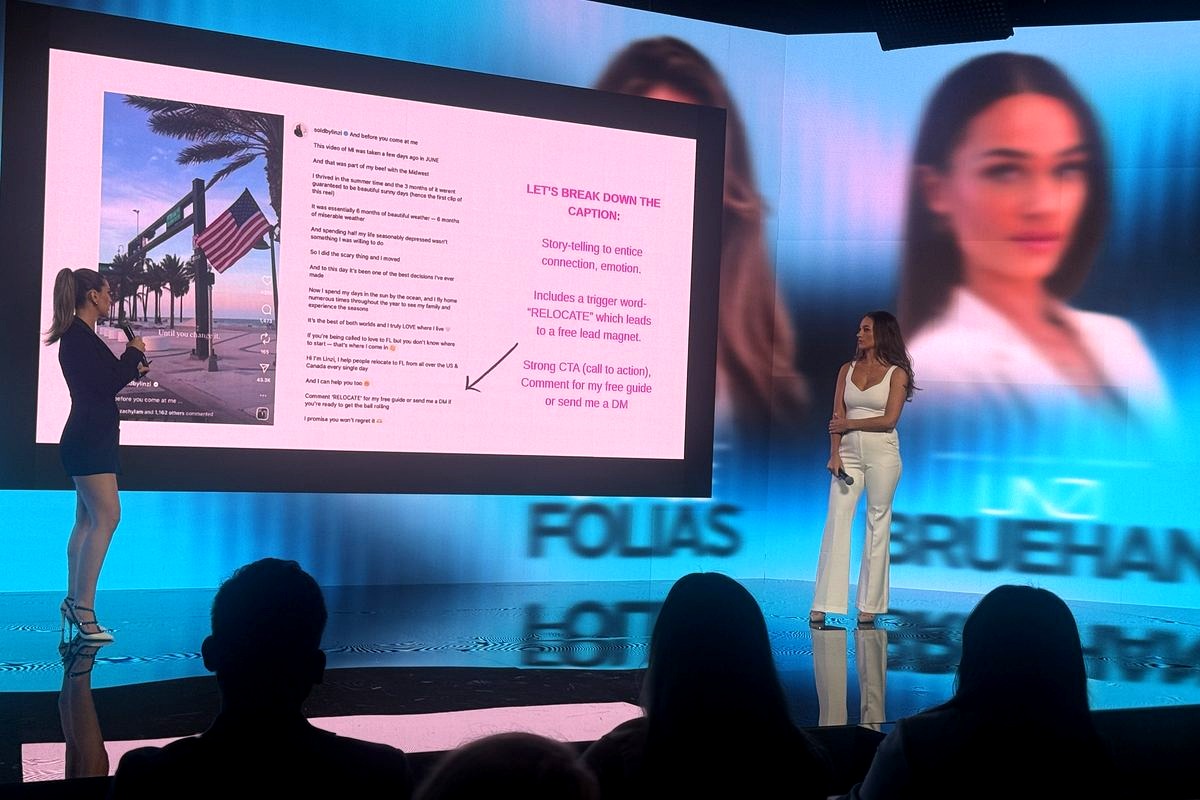
If you research LED walls for even five minutes, you’ll encounter the term pixel pitch. It’s the single most important specification to understand, and it’s simpler than it sounds.
What Pixel Pitch Means
Pixel pitch is the distance—measured in millimeters—between the center of one LED pixel and the center of the adjacent pixel. It’s expressed as a number like P2.6, P3.9, or P4.8.
- Lower pixel pitch (e.g., P1.5 or P2.6): Pixels are packed more tightly together. This produces a higher-resolution image and allows audiences to sit or stand closer without seeing individual dots.
- Higher pixel pitch (e.g., P4.8 or P5.9): Pixels are spaced farther apart. The image looks great from a distance but may appear pixelated up close.
How to Choose the Right Pixel Pitch for Your Event
The right pixel pitch depends on your minimum viewing distance—how close the nearest audience member will be to the screen. A general rule of thumb used by AV professionals:
Minimum comfortable viewing distance (in feet) ≈ pixel pitch number × 3.3
So for a P2.6 wall, the nearest viewer should be approximately 8.5 feet away. For a P3.9 wall, about 13 feet. Here’s a quick reference table:
- P1.5 – P2.0: Boardrooms, close-proximity displays, luxury product reveals. Viewing distance as close as 5–6 feet.
- P2.6: The sweet spot for most indoor events—conferences, galas, corporate presentations. Comfortable from about 8+ feet.
- P3.9: Mid-size ballrooms, general sessions, and stages where the front row is 12+ feet from the screen.
- P4.8 and above: Large arenas, outdoor festivals, and venues where audiences are 15+ feet or more from the display.
At venues in the Chantilly, Centreville, and Dulles corridor area that cater to corporate events, P2.6 is the most commonly installed pixel pitch because it balances resolution, cost, and versatility for events ranging from 50 to 500 attendees.
How LED Walls Are Used at Events in 2026
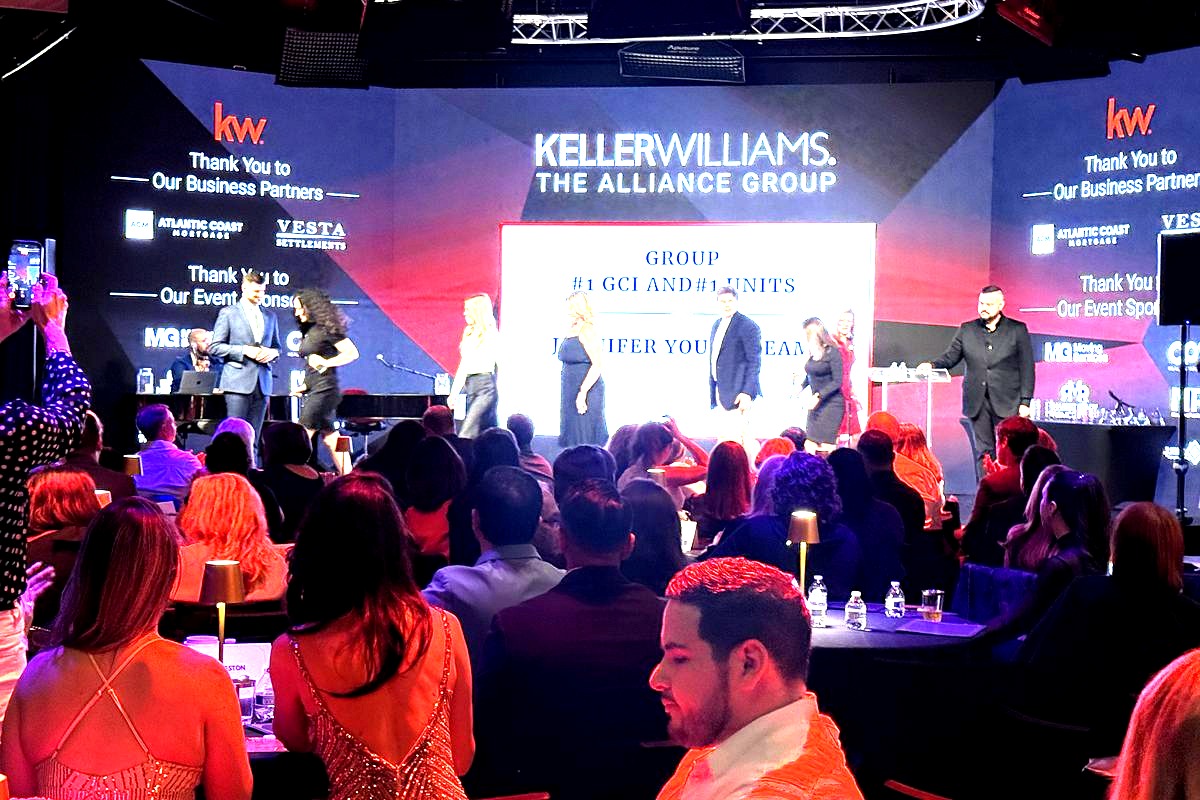
Understanding the technology is one thing. Seeing how it’s actually applied is where it gets exciting. Here are the most common—and most creative—ways event planners in the Northern Virginia region are leveraging LED walls in 2026.
1. Dynamic Stage Backdrops
Gone are the days of static printed banners behind a podium. An LED wall as a stage backdrop lets you display branded visuals, live camera feeds of the speaker, real-time social media walls, countdown timers, and cinematic video content—all from the same surface. For corporate conferences near Fairfax, Herndon, or Ashburn, this is now the standard expectation for professional-quality events.
2. Immersive Environmental Design
Multiple LED walls can wrap around a room or create a three-sided enclosure that transports attendees into a completely different environment. Imagine a product launch where your audience is surrounded by a 270-degree ocean scene, or a gala where the walls transition from a starlit sky to your brand’s signature color palette. This type of immersive environment was once exclusive to massive productions—now it’s accessible at modern event venues right here in the Dulles South Court area of Chantilly.
3. Presentations and Data Visualization
For business conferences and all-hands meetings, LED walls display PowerPoint slides, Keynote presentations, and data dashboards with unmatched clarity. Because the brightness far exceeds projectors, you don’t need to dim the lights—meaning your audience stays alert, can take notes, and remains engaged. This is particularly important for day-long conferences where attendee energy management matters.
4. Live Streaming and Hybrid Events
Hybrid events—where some attendees are in the room and others join remotely—remain a significant format in 2026. An LED wall can simultaneously display remote speakers, live chat feeds, and the in-room presentation. When paired with professional cameras and a production switcher, the LED wall becomes the visual backbone of the entire hybrid experience.
5. Social Media and Interactive Content
Event planners are increasingly using LED walls to display live social media feeds, event hashtags, poll results, Q&A submissions, and gamification leaderboards. This transforms a passive screen into an interactive engagement tool that drives audience participation and generates shareable content.
6. Branding and Sponsorship Revenue
For organizations hosting events with sponsors, an LED wall becomes a programmable asset. Sponsor logos can rotate during breaks, branded content can fill transitions between speakers, and premium screen time can be sold as part of sponsorship packages. Some event organizers in the Loudoun County and Fairfax County area have reported that LED wall sponsorship placements help offset 15–25% of their total event production costs.
Key Technical Components Behind an LED Wall Setup
You don’t need to become an AV engineer, but understanding the basic components will help you communicate with vendors and venue teams more effectively.
The LED Panels Themselves
As discussed, these are the modular building blocks. They’re typically mounted on a ground-support structure (a frame that sits on the floor) or flown from rigging points in the ceiling. Indoor panels are lightweight—often around 15–20 pounds per cabinet—and designed for quick assembly.
The Video Processor
A video processor (sometimes called a scaler or sender) takes your content source—a laptop, media server, camera feed—and translates it into a signal that the LED wall can display. High-quality processors handle resolution mapping, color calibration, and multi-source switching. Brands like Novastar and Brompton are industry standards you may hear referenced.
The Content Source
This is whatever is feeding visuals to the wall: a laptop running a presentation, a media server playing back pre-produced video, a live camera with a production switcher, or even a real-time graphics engine. The content source is where your creative vision comes to life.
Cabling and Signal Distribution
LED walls typically use Ethernet (Cat6) or fiber-optic cabling to transmit data from the processor to the panels. For events, clean cable management is essential both for safety and aesthetics. Professional venues handle this infrastructure behind the scenes so your event looks polished from every angle.
Rigging or Ground Support
The physical structure that holds the LED panels in place matters enormously. Ground-support frames are the most common for indoor events—they’re stable, adjustable, and don’t require ceiling rigging points. Some venues have permanent mounting systems that eliminate setup time entirely, which is a significant advantage when your load-in window is tight.
What to Look for in an LED Wall Venue Near Chantilly, VA
If you’re searching for a venue with built-in LED wall capabilities within 20–30 miles of Chantilly, here’s what to evaluate:
- Pixel pitch of the installed wall: Ask specifically. P2.6 is ideal for most corporate and social events.
- Total screen dimensions: Ensure the LED wall is large enough to serve your audience size. A wall that’s 16 feet wide × 9 feet tall is a common configuration for events of 100–300 guests.
- Built-in AV production: Does the venue include video processing, switching, and technical support, or will you need to hire an outside AV company? Venues with in-house production save significant cost and coordination headaches.
- Content support: Can the venue’s team help you format and optimize your content for the LED wall? Aspect ratios, resolution, and file formats matter.
- Flexible configurations: Can the LED wall be reconfigured—split into multiple screens, curved, or repositioned—to suit different event layouts?
- Lighting control: An LED wall looks best in a room with controllable ambient lighting. Venues with professional lighting grids and dimming capability will give you the best results.
Within the Chantilly, Centreville, South Riding, and Dulles area, only a handful of venues offer truly integrated LED wall experiences where the technology is built into the room rather than rented in for each event. This distinction matters because permanent installations are calibrated, maintained, and optimized for the specific room—delivering better image quality and faster setup compared to temporary rental walls.
Common Misconceptions About LED Walls at Events
Let’s clear up a few myths that frequently trip up first-time planners:
Myth: LED Walls Are Only for Huge Events
Reality: LED walls are scalable. A 10-foot-wide display works beautifully for a 50-person executive meeting. You don’t need a 5,000-person arena to justify the technology.
Myth: LED Walls Are Fragile
Reality: Professional-grade LED panels are engineered for the live events industry. They’re transported, assembled, and disassembled routinely. Modern cabinets feature protective coatings, magnetic module attachments, and robust aluminum frames.
Myth: You Need a Dedicated AV Team to Run an LED Wall
Reality: At venues with integrated LED wall systems and on-site production support, a single technician can manage the wall for your entire event. The technology has matured significantly—content playback, source switching, and basic troubleshooting are streamlined in modern systems.
Myth: Any Content Looks Good on an LED Wall
Reality: Content quality matters. A low-resolution JPEG stretched across a 20-foot LED wall will look terrible. The best results come from content designed at the wall’s native resolution, using high-contrast visuals and motion graphics optimized for LED display. Working with a venue that offers content guidance is a genuine advantage.
Frequently Asked Questions About LED Walls for Events
What is an LED wall for events and how does it work?
An LED wall for events is a large-format display made of modular LED panels tiled together to create a seamless screen. Each panel contains thousands of tiny light-emitting diodes that produce red, green, and blue light, combining to form full-color images and video. A video processor translates your content source—whether a laptop, camera, or media server—into a signal displayed across all panels simultaneously, creating one unified image.
How much does it cost to use an LED wall at an event?
Costs vary significantly. Renting a temporary LED wall with a production crew can range from $5,000 to $30,000+ depending on wall size, pixel pitch, and event duration. However, booking a venue with a permanently installed LED wall often includes the technology in the venue rental fee, which can save event planners thousands of dollars compared to sourcing the equipment separately.
What pixel pitch is best for indoor corporate events?
For most indoor corporate events—conferences, galas, product launches, and presentations—a pixel pitch of P2.6 is considered the industry sweet spot. It delivers excellent image clarity for audiences sitting as close as 8 feet from the screen and works well for rooms hosting 50 to 500 attendees.
Can I display my own content on an LED wall?
Yes. You can display PowerPoint presentations, videos, branded graphics, live camera feeds, social media walls, and more. For best results, content should be created at the LED wall’s native resolution and formatted in the correct aspect ratio. Many professional event venues with built-in LED walls offer content formatting support to ensure your visuals look polished.
Do LED walls work in well-lit rooms?
Absolutely. One of the biggest advantages of LED walls over projectors is their brightness. Most indoor LED walls output 800 to 1,500+ nits of brightness, making them clearly visible even in fully lit rooms. This means you don’t need to dim the lights for presentations, which helps keep audiences engaged and alert throughout the day.
Where can I find a venue with an LED wall near Chantilly, Virginia?
Trivision Event Center, located at 3856 Dulles South Court in Chantilly, VA, features permanently installed LED walls with professional AV production capabilities. The venue serves the broader Northern Virginia area—including Centreville, Fairfax, Herndon, Ashburn, and the entire Dulles corridor—providing an integrated LED wall experience for corporate events, galas, and conferences in 2026.
Ready to See an LED Wall in Action?
Now that you understand what an LED wall for events is—from pixel pitch to video processors to real-world applications—you’re equipped to make informed decisions for your next event. The technology is accessible, scalable, and increasingly expected by audiences attending professional events in 2026.
If you’re planning a corporate event, conference, gala, or branded experience within 20–30 miles of Chantilly, VA, Trivision Event Center offers one of the most advanced integrated LED wall environments in the region. Our permanently installed LED walls, professional AV production support, and flexible studio spaces mean you get stunning visual impact without the complexity and cost of sourcing everything separately.
Schedule a tour of Trivision Event Center and experience the difference a built-in LED wall venue makes. Your audience will notice—and your event will never look the same.